
A friend of mine shared that she had been experiencing recurrent panic attacks.
She visited a doctor, and was prescribed anti-anxiety medication.
Curious and wanting to understand, she asked, “But why is this happening to me?
”The doctor responded, “Har kyun ka jawab nahi hota.” (Not every why has an answer.)
The sentence stayed with me — not because it’s wrong, but because sometimes understanding the why is exactly what brings healing.
When we understand what’s happening inside our body:
Shame reduces
Fear softens
We stop believing “something is wrong with me”
Panic begins to make sense, not feel like chaos
And understanding is often the very first step in helping your body feel safe again.
So, What Is a Panic Attack, Really?
People often ask:
What is the meaning of a panic attack?
Why does a panic attack happen?
What does a panic attack feel like?
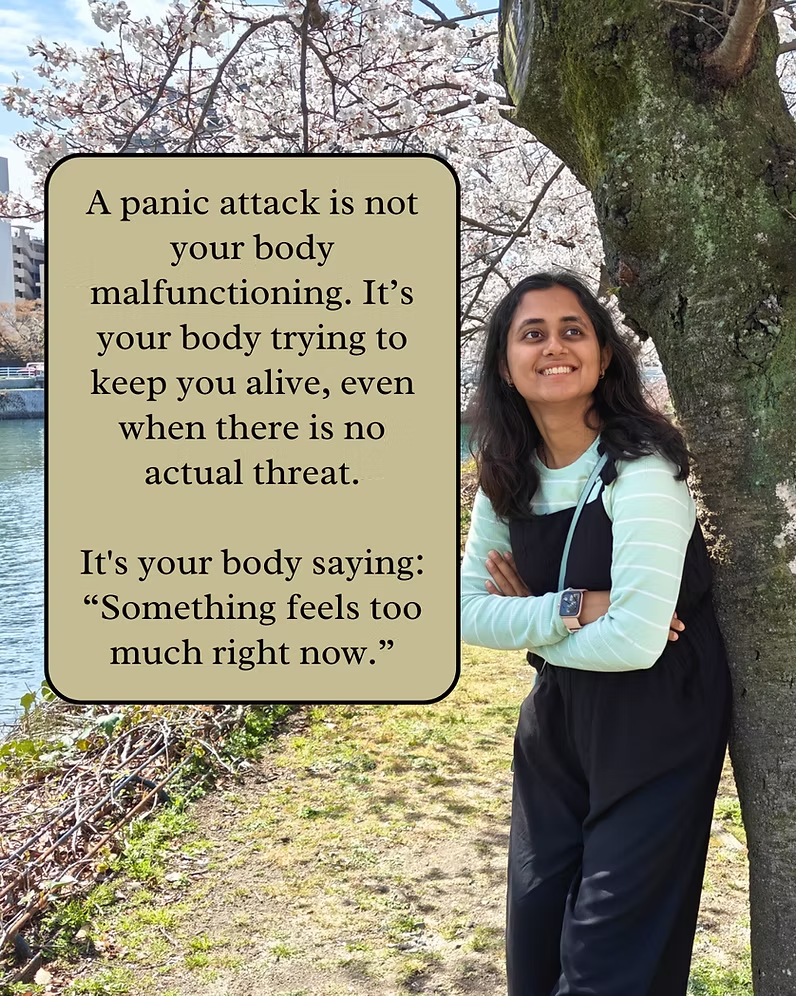
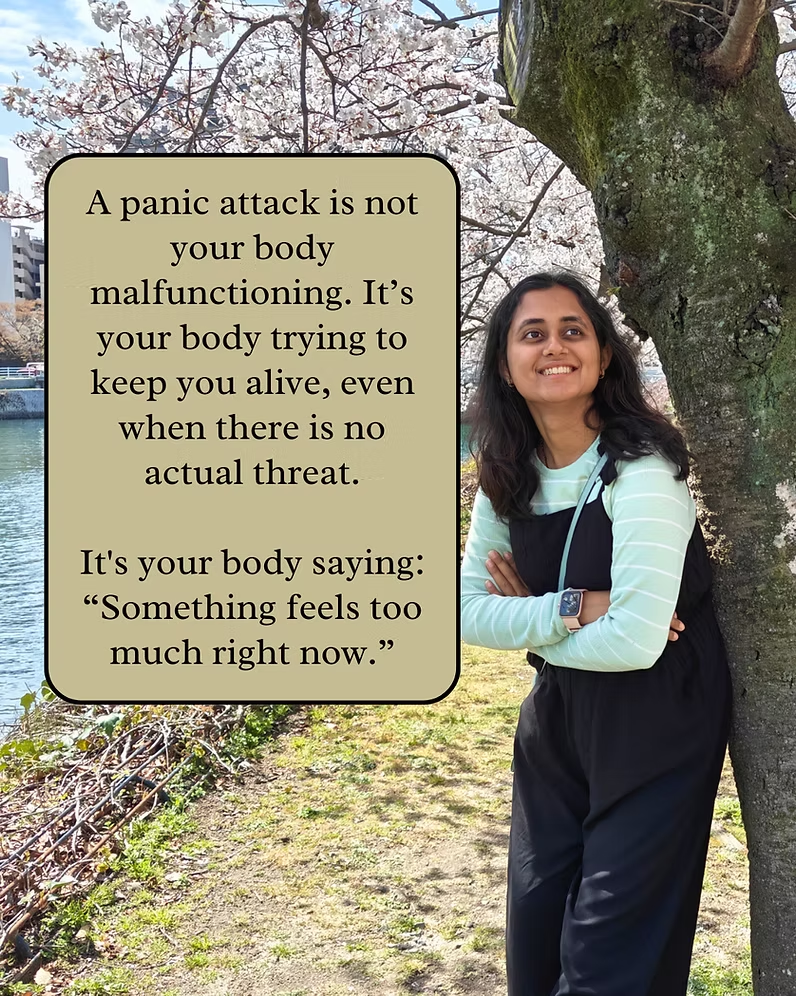
A panic attack is not a random overreaction or loss of control.
It is a survival response, triggered when your nervous system believes you’re in danger — even if you’re actually safe.
Your internal alarm system (the amygdala) senses threat and activates instant protective responses.
And that “threat” may be emotional, such as:
fear of abandonment
overwhelm or uncertainty
reminders of past trauma
conflict, pressure, shame, rejection
Your body does not distinguish between emotional danger and physical danger.
It simply chooses survival.
What’s Happening Biologically During a Panic Attack?
When the brain detects a possible threat, the sympathetic nervous system switches on — preparing for fight or flight.
This creates symptoms like:
racing heartbeat
tight chest
rapid or shallow breathing
trembling or shaking
dizziness or numbness
sweating
feeling unreal or detached
This is why panic can feel like:
“I can’t breathe.”
“I’m losing control.”
“I’m going to faint.”
“Something terrible is happening.”
But biologically, these sensations are your body trying very hard to keep you alive.
The alarm becomes oversensitive when the nervous system has learned to stay alert from past experiences of stress or trauma — so it fires even when there is no actual danger.
The Trauma-Informed Lens: Your Body Is Remembering, Not Malfunctioning
Unprocessed stress and emotional wounds don’t just disappear.
They leave imprints on the body — not as memories, but as sensitivities.
This means:
Your body becomes quicker to sense threat.
Small stresses feel bigger.
Old alarms get triggered by present-day pressure.
This is nervous system dysregulation — not emotional weakness.
A panic attack is your body saying:
“Something feels familiar… and I’m scared.”
Understanding this helps shift the question from:
❌ “What’s wrong with me?”
to ✔️ “What happened to my nervous system — and how can I support it?”
So, How Do You Stop or Calm a Panic Attack?
Here are some trauma-informed, body-based tools that help.
1. Ground the Body (Immediate & Effective for Most People)
These techniques help calm yourself during a panic attack:
Place both feet firmly on the ground
Press your palms together
Look around and name 5 things you can see
Put a hand on your chest and breathe slowly
Lengthen your exhales — inhale 4, exhale 6
This tells the nervous system: “You are safe right now.”
2. Use Movement to Release Fight/Flight Energy
Your body is preparing to run or defend. Gentle movement helps complete the stress cycle:
walking slowly
shaking out limbs
stretching your arms
soft neck rolls
Movement brings you back into your body.
3. Co-Regulation: Borrow Someone Else’s Calm
If you want to help someone during a panic attack:
speak slowly, softly
let them match your breathing
offer presence without pressure
say, “I’m here, you’re safe.”
avoid telling them to “calm down” or “stop overreacting”
Safety is felt through connection.
4. Trauma-Informed Therapy (Long-Term Prevention)
Talking to a trained therapist helps your body:
understand triggers
process stored stress
learn new patterns
build capacity and regulation
Panic becomes less frequent when the nervous system learns safety again.
5. Understanding Your Triggers
Awareness is a powerful prevention tool. Noticing early signs helps you intervene before panic escalates.
Early cues may include:
tight chest
shallow breath
feeling “off”
sudden fear, dread, or urgency
emotional overwhelm
When you recognize these early, grounding becomes easier and more effective.
In essence, A panic attack is not your failure.
It is your body trying — urgently, intensely — to protect you.
Once you understand that, the healing question becomes:
“How can I help my nervous system feel safe again?”
That is where recovery begins.
In compassion, not judgment.
In connection, not isolation.
In listening to your body, not fighting it.
And slowly, gently, your system learns: “I am safe now.”
Hey there, thanks for reading my blog. If you’re new here, you might consider checking out my other blog posts too. Happy Reading!