
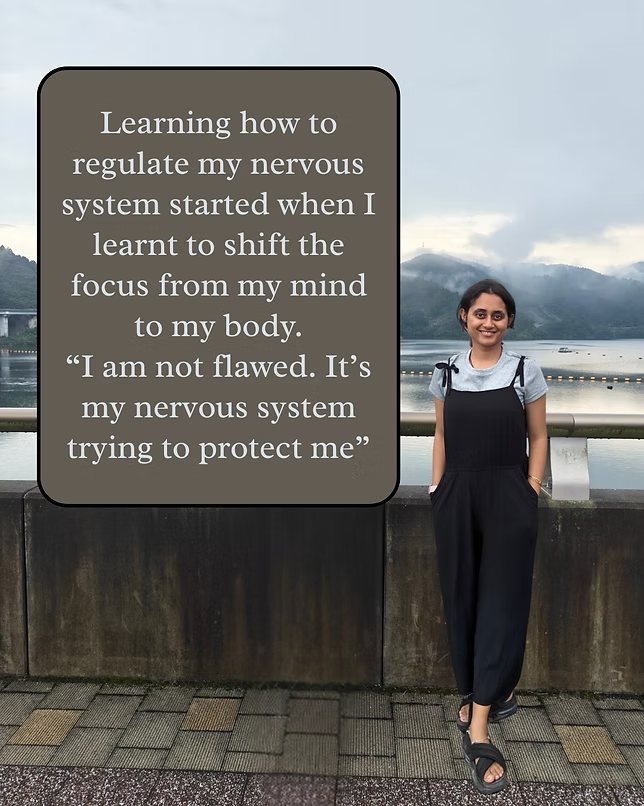
For a long time, I used to freeze.
Before making decisions. Before responding to messages. Before choosing a direction.
My mind would go blank.
Inside, there were too many voices — weighing pros and cons, imagining best-case scenarios and worst-case fears.
Every option felt like a risk. Every step felt unsafe.
I would sit there, stuck in thought, unable to move.
And then feel ashamed:“Why am I like this?”“Why can’t I just decide like other people do?”
I didn’t know then that I wasn’t “indecisive.”
I was dysregulated.
My body didn’t feel safe.
What Is the Freeze Response? (And Why It Happens)
When your body senses threat, your nervous system instantly tries to protect you.
This is called the stress response cycle, and it includes:
Fight — pushing back, arguing, resisting
Flight — escaping, avoiding, staying busy
Fawn — people-pleasing or appeasing
Freeze — shutting down, going blank, feeling disconnected
Freeze is often misunderstood. The body isn’t giving up — it’s protecting you the fastest way it knows.
The body says:“If I stop moving, maybe the danger will pass.”
Understanding this is often the fastest way to reset your nervous system, because it shifts the shame into compassion.
How to Tell if Your Nervous System Is Dysregulated
People often ask: “How do I tell if my nervous system is dysregulated?”
Dysregulation can feel like:
Mental fog or going blank
Feeling stuck or unable to make decisions
Chronic overthinking
Emotional numbness
Feeling overwhelmed by small tasks
Sudden irritability or shutdown
Feeling like your body is “on alert” even when nothing is happening
If you relate to these, your system may not feel safe — and it’s trying to protect you.
When I first learned that my Freeze wasn’t a flaw but a sign of nervous system dysregulation, everything shifted.
I stopped calling myself lazy or weak.
Instead of asking,“What’s wrong with me?”
I began asking,“What feels unsafe right now?”
That question softened something inside me.
Healing didn’t mean forcing myself to act faster.
It meant helping my body feel safe again.
How to Regulate Your Nervous System (Gently, Not Forcefully)
A lot of people ask:“How do you regulate the nervous system?”
“What is the fastest way to reset your nervous system?”
True regulation always begins in the body — not the mind.
Here are the practices that changed everything for me:
1. Grounding the Body
Put your feet flat on the floor.
Feel the support beneath you.
Say to yourself: “I am safe right now.”
Grounding is one of the simplest nervous system regulation exercises.
2. Slower Breathing
Long exhales tell your brain that the danger is gone. This signals your vagus nerve and helps pull you out of freeze.
3. Name the Emotion
When you acknowledge your emotion, your body stops bracing against it.
4. Notice Triggers Without Judgment
Many triggers are connected to past experiences stored in the body.
Awareness slowly teaches your system that the present is not the past.
None of this is instant.
But it works.
The more you practice, the faster your nervous system resets — and the less you stay stuck in freeze.
Healing a Dysregulated Nervous System Takes Time — But It’s Possible
Freezing doesn’t mean you’re broken.
It means your body learned that pausing was the safest thing to do.
And maybe for you, it isn’t Freeze:
Maybe it’s Fight — pushing back when you feel cornered.
Maybe it’s Flight — rushing away from what feels heavy.
Maybe it’s Fawn — trying to keep peace even at your own cost.
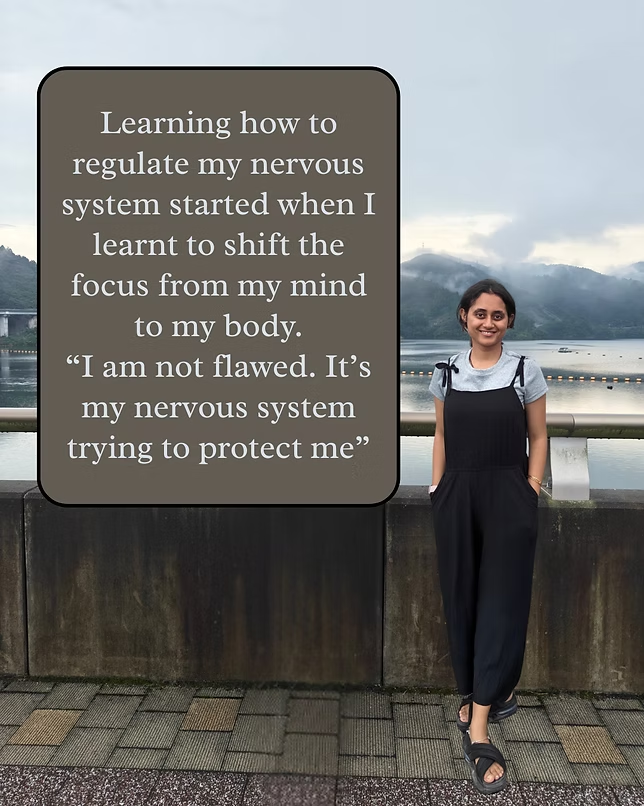
None of these responses make you flawed. They show how your nervous system adapted to protect you.
And the good news? You can teach your system new ways now.
Start by grounding.
Start by breathing.
Start by noticing what safety feels like in your body today.
There is a way out.
And it begins in your body — not your head.
Hey there, thanks for reading my blog. If you’re new here, you might consider checking out my other blog posts too. Happy Reading!